Welcome to Shandong Fujuding Heavy Industry Machinery Co., Ltd.
WhatsApp :+8618365798155 Email : sales1@fujudingzg.com


-
PRODUCT CENTERShandong Fujuding Heavy Industry Machinery Co., Ltd. is a professional supplier of metal products, focusing on stainless steel, carbon steel, aluminum, copper and other series of products. We boast complete material grades and a wide range of specifications to meet diverse customization needs of global customers. Adhering to the business philosophy of superior quality at competitive prices, we strictly control every production link to ensure stable product quality. We warmly welcome enterprises and business partners from all over the world to send inquiries and discuss cooperation opportunities with us!

2205 Stainless steel coil
PRODUCT DETAILS
2205 duplex stainless steel coil is a high-performance austenitic-ferritic duplex steel, recognized as one of the most widely used duplex stainless steel materials globally. It conforms to core international and national standards including ASTM A240/A480, GB/T 24518, and EN 10088.
With a balanced chemical composition of 22% chromium, 5% molybdenum, 7% nickel, and 0.14% nitrogen, it has a Pitting Resistance Equivalent Number (PREN) of ~40, endowing it with exceptional resistance to pitting corrosion, crevice corrosion, stress corrosion cracking (SCC), and chloride ion erosion.
Structurally, it consists of approximately 50% austenite and 50% ferrite, combining the high strength of ferritic stainless steel (tensile strength twice that of 304/316 austenitic stainless steel) and the toughness, ductility, and weldability of austenitic stainless steel. As a coiled product, it offers excellent flexibility for processing into plates, pipes, heat exchangers, pressure vessels, and custom components, making it ideal for harsh corrosive environments and large-scale industrial applications.
2. Applicable Standards
Standard Type Standard Number Description
American Standard ASTM A240/A480 Standard specification for chromium and chromium-nickel stainless steel sheet, plate, and coil
Chinese Standard GB/T 24518 Hot-rolled and cold-rolled duplex stainless steel steel strip and coil
European Standard EN 10088 Stainless steel - Technical delivery conditions for flat products
Global Trade ASME SA240 Adopted by American Society of Mechanical Engineers for pressure vessel applications
3. Chemical Composition (Mass Fraction)
Element Content Limit Notes
Carbon (C) ≤0.03% Low carbon content minimizes carbide precipitation and sensitization
Silicon (Si) ≤1.00% Improves oxidation resistance and deoxidization during smelting
Manganese (Mn) ≤2.00% Enhances strength and ductility
Phosphorus (P) ≤0.030% Reduces brittleness and improves corrosion resistance
Sulfur (S) ≤0.015% Avoids hot cracking during welding and processing
Chromium (Cr) 21.00% – 23.00% Core element for corrosion resistance and passivation film formation
Nickel (Ni) 4.50% – 6.50% Stabilizes austenite structure and improves toughness
Molybdenum (Mo) 2.90% – 3.50% Enhances resistance to chloride corrosion and acid attack
Nitrogen (N) 0.10% – 0.20% Boosts strength and pitting corrosion resistance
Iron (Fe) Balance Base material of the alloy
4. Mechanical Properties (Room Temperature, Typical Values)
Property Standard Requirement Typical Value Test Standard
Tensile Strength (MPa) ≥760 800 – 900 ASTM A240
Yield Strength (0.2% offset, MPa) ≥550 550 – 650 ASTM A240
Elongation (A5, %) ≥25 30 – 35 ASTM A240
Hardness (HB) ≤310 220 – 280 ASTM E10
Charpy Impact Toughness (J, -40°C) ≥30 40 – 60 ASTM E23
5. Physical Properties
Property Value
Density (g/cm³) 7.8
Melting Point (°C) 1400 – 1450
Thermal Conductivity (W/(m·K), 100°C) 19
Electrical Resistivity (μΩ·cm) 75
Thermal Expansion Coefficient (10⁻⁶/°C, 20–100°C) 13.8
Modulus of Elasticity (GPa) 200
6. Core Advantages & Properties
Superior Corrosion Resistance
Outperforms 316L austenitic stainless steel in chloride-containing environments (seawater, salt spray, chemical brine).
Resists SCC in chloride and sulfide environments, a common failure issue for standard austenitic steels.
Excellent resistance to pitting/crevice corrosion in acidic/alkaline media (hydrochloric acid, sulfuric acid, seawater).
High Strength & Lightweight
Tensile strength is double that of 304/316, allowing reduced wall thickness for components, cutting material costs and weight.
Maintains stable mechanical properties at both low and moderate temperatures (-50°C to 300°C).
Excellent Weldability & Formability
Weldable via TIG, MIG, SAW, and plasma welding; no post-weld heat treatment is required for most applications.
Good cold forming (bending, stamping, rolling) and machining performance for complex component fabrication.
7. Production Process
The production of 2205 duplex stainless steel coil follows a strict, standardized process to ensure structural balance and performance stability:Smelting & Refining: Electric arc furnace (EAF) + argon-oxygen decarburization (AOD) / vacuum oxygen decarburization (VOD) smelting, with precise control of chemical composition to maintain a 50/50 austenite-ferrite ratio.
Continuous Casting: Casting into billets/slabs with uniform internal structure.
Hot Rolling: Heating slabs to 1100–1200°C, then hot rolling into hot-rolled coils (NO.1 surface), followed by annealing and pickling to remove scale and stabilize the structure.
Cold Rolling (Optional): For cold-rolled coils (2B/BA/NO.4/HL surfaces), hot-rolled coils are further cold-rolled to the required thickness.
Annealing & Pickling: Critical process to restore the balanced austenite-ferrite structure; pickling removes oxide scale and restores corrosion resistance.
Precision Finishing: Slitting to custom widths, edge trimming, and leveling (if required).
Quality Inspection: 100% inspection of chemical composition, mechanical properties, dimensions, and surface quality.
Packaging: Sealed packaging to prevent rust and damage during storage/transport.
8. Surface Finishes & Treatments
Common surface finishes for 2205 stainless steel coils, tailored to application needs:
Finish Surface Feature Application Scenario
NO.1 Dull, hot-rolled surface with natural oxide scale Industrial equipment, pressure vessels, structural components
2B Smooth, cold-rolled, pickled surface (matte finish) General industrial parts, piping, kitchen equipment
BA Bright, annealed surface (mirror-like finish) Food/beverage equipment, precision components
NO.4 Brushed finish Architectural cladding, decorative parts, marine components
HL Hairline finish Decorative panels, automotive parts
Special Treatments Passivation, polishing, anti-fingerprint coating High-end decorative, food-grade, and marine applications
9. Standard Specifications & Tolerances
9.1 Dimensions
Parameter Standard Range Customizable
Thickness Hot-rolled: 3.0 – 12.0 mm; Cold-rolled: 0.3 – 3.0 mm 0.1 – 20 mm (per customer request)
Width Hot-rolled: 1000 – 1500 mm; Cold-rolled: 100 – 1500 mm Custom width via slitting
Coil Weight 3 – 15 tons per coil Up to 30 tons (per production capacity)
Length Continuous coil (unlimited) Cut-to-length sheets (custom size)
9.2 Tolerance Standards
Complies with ASTM A480 and GB/T 24518 tolerances:
Thickness tolerance: ±0.05 – ±0.15 mm (cold-rolled); ±0.10 – ±0.30 mm (hot-rolled)
Width tolerance: ±0.5 – ±1.0 mm
Flatness: ≤5 mm/m (cold-rolled); ≤8 mm/m (hot-rolled)
Surface defects: No cracks, pits, scratches, or inclusions (per standard grade)
10. Key Application Areas
10.1 Petroleum & Chemical Industry
The most mainstream application field, used for corrosive media handling:
Heat exchangers, reactors, and cooling coils for hydrochloric acid, sulfuric acid, and crude oil processing.
Desulfurization/denitrification pipelines, chemical storage tanks, and fluid transportation pipes.
Petrochemical plant pressure vessels and pipeline systems.
10.2 Offshore & Marine Engineering
Resists severe saltwater and marine atmospheric corrosion:
Seawater desalination plants (RO membrane shells, heat exchangers, seawater pipelines).
Offshore oil/gas platform risers, ballast water treatment systems, and marine engine cooling coils.
Ship hull linings, ballast tanks, and coastal ship pipeline systems.
10.3 Water Treatment Industry
Industrial/municipal wastewater treatment tanks, sludge pipelines, and chemical-resistant equipment.
Coastal urban water supply pipelines and high-salinity water treatment systems.
10.4 Food & Beverage Industry
Complies with food safety standards (FDA/GB 4806):
Dairy processing cooling tanks, pasteurization equipment, and juice brewing systems.
Food-grade piping, sauce/vinegar storage tanks, and beverage production lines.
10.5 Energy & Power Industry
Thermal power plant flue gas desulfurization (FGD) systems, ash/sludge handling pipelines.
Nuclear power auxiliary cooling systems and geothermal power plant heat exchangers.
10.6 Paper Making Industry
Resists chlorine dioxide, sulfurous acid, and pulping chemicals:
Pulping digesters, bleaching towers, and chemical pulp storage tanks.
White water pipelines and paper machine corrosion-resistant components.
10.7 Other Applications
Pressure Vessels: High-pressure storage tanks for gas/liquid corrosive media.
Architectural Engineering: Coastal building cladding, curtain walls, and decorative panels.
Automotive: Exhaust system components, fuel tanks, and hydraulic pipelines (resists road salt spray).
11. Welding & Fabrication Guidelines
Welding Methods: TIG (GTAW), MIG (GMAW), submerged arc welding (SAW), and plasma arc welding are recommended.
Filler Materials: Match 2205 duplex welding wires (e.g., ER2209) to maintain the austenite-ferrite balance.
Processing Notes: Avoid excessive heating during welding/fabrication to prevent ferrite content imbalance; use proper cooling to reduce residual stress.
Forming: Cold bending and stamping are feasible; pre-heating is not required for low-temperature forming.
12. Quality Control & Certifications
12.1 Quality Inspection Process
Chemical composition analysis (spectrometer).
Mechanical property testing (tensile, impact, hardness tests).
Nondestructive testing (ultrasonic testing for internal defects, eddy current testing for surface flaws).
Dimension and surface quality inspection (coordinate measuring machine, visual inspection).
12.2 Available Certifications
Mill Test Report (MTR): Includes chemical composition, mechanical properties, and inspection results.
Third-party certifications: SGS, BV, DNV, ABS (for marine/offshore applications).
Management system certifications: ISO 9001 (quality), ISO 14001 (environment), ISO 45001 (occupational health).
13. Packaging & Transportation
13.1 Standard Packaging
Internal: Moisture-proof paper + anti-rust oil coating (prevents rust in humid environments).
External: Steel strip bundling + waterproof plastic film + wooden pallets/boxes (avoids collision/scratches).
Marking: Product specifications, standard, batch number, and manufacturer information.
13.2 Transportation & Storage
Transport via sea, land (truck/rail), or air (small batches); avoid direct exposure to rain and salt spray.
Store in a dry, ventilated warehouse; stack on wooden pallets to prevent ground contact corrosion.
Warehouse Storage
As a steel supplier in Shandong Province, we have our own factory as follows: the seamless stainless steel pipe factory located in Wuxi. A welding stainless steel pipe factory located in Wuxi. A stainless steel coil processing workshop for cutting, winding, and unwinding steel coils.
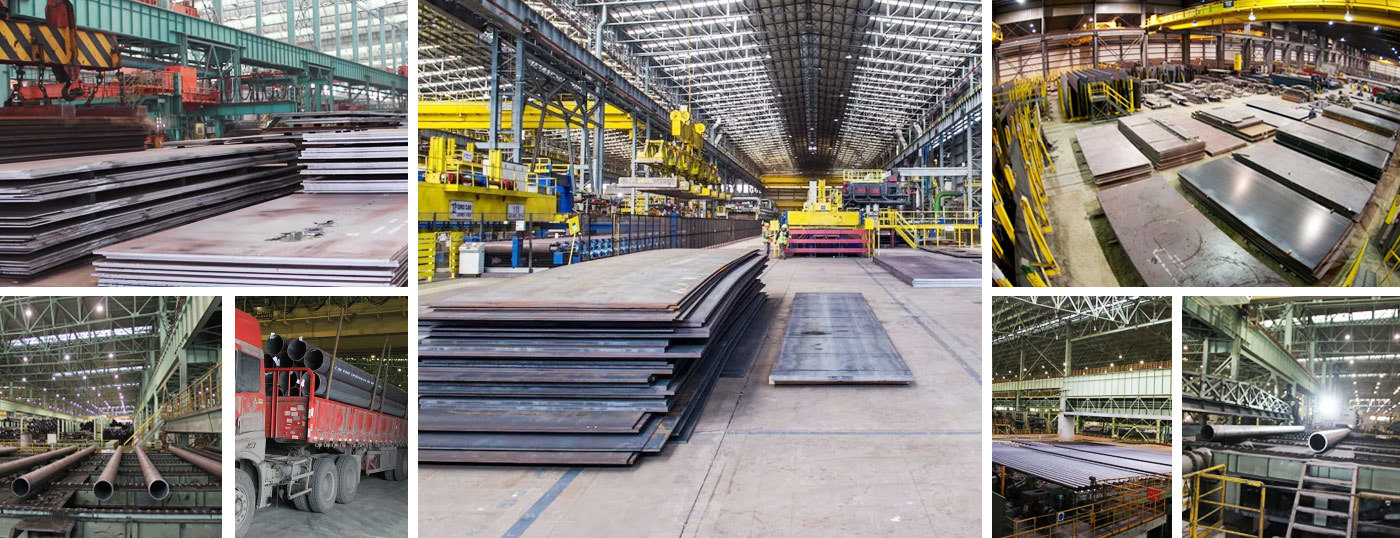
Packing and shipping
Now the main business scope of our company covers various kinds of Stainless steel and carbon steel materials , such as hot rolled / cold rolled stainless steel coils / sheet , Seamless / welded stainless steel pipe ( tube ).

Technology

Customer conversation
We provide the products consultation , purchase plan suggestion , logistic service ( including the shipment service , custom works ,etc ).
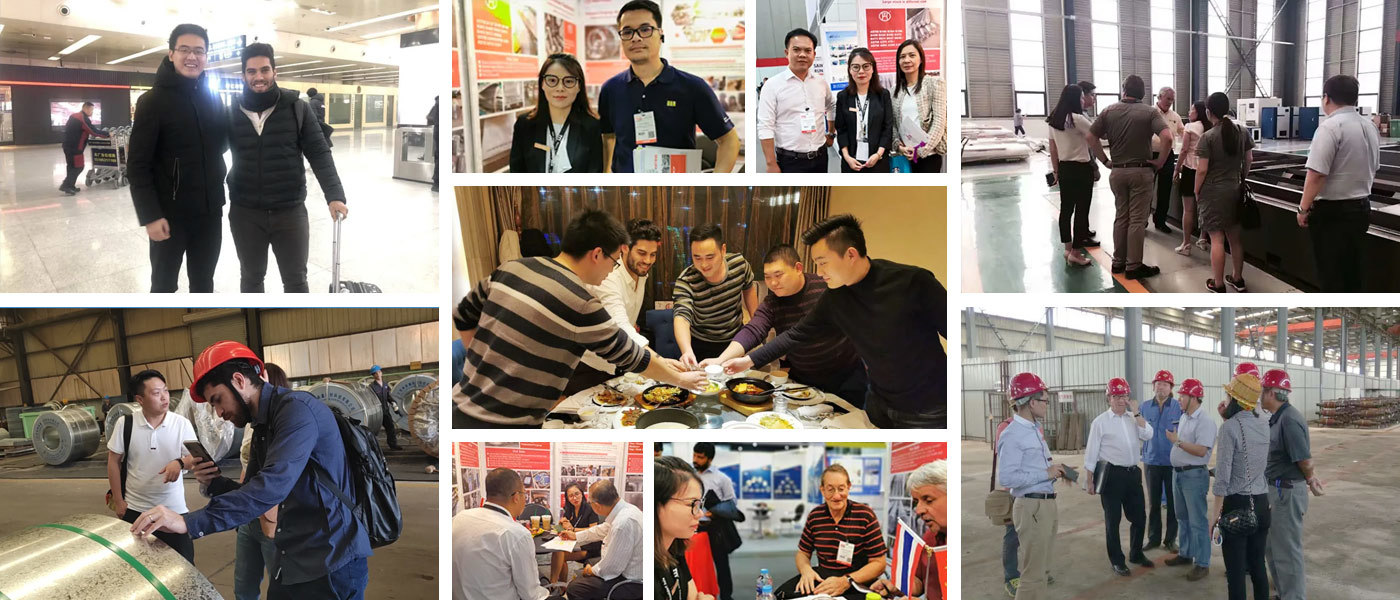
Application field
The predecessor of Shandong Province Reliance Steel Material Co ., Ltd . founded in 2012, it belongs to Industry Bureau of Shandong Province . Aims to promote the development of Stainless / Carbon steel industry of .

FAQ
Q1. Are you a factory or trading company?
We are a direct manufacturer with our own production lines. Welcome factory audit and on-site inspection.
Q2. Can you provide free samples?
Yes, we offer free samples for quality testing. Customers only need to bear the shipping cost.
Q3. What’s your MOQ?
Low MOQ for standard products, trial orders are accepted. Larger quantity will have better unit price.
RELATED PRODUCTS
GET A FREE QUOTE
CONTACT US
Email : sales1@fujudingzg.com
Tel:+8618365798155
WhatsApp:+8618365798155
Add : International Financial Center, Dongchangfu District, Liaocheng City, Shandong Province
GET A FREE QUOTE
Copyright : Shandong Fujuding Heavy Industry Machinery Co., Ltd.